Why We Scrapbook: Community Stories That Keep Memories Alive
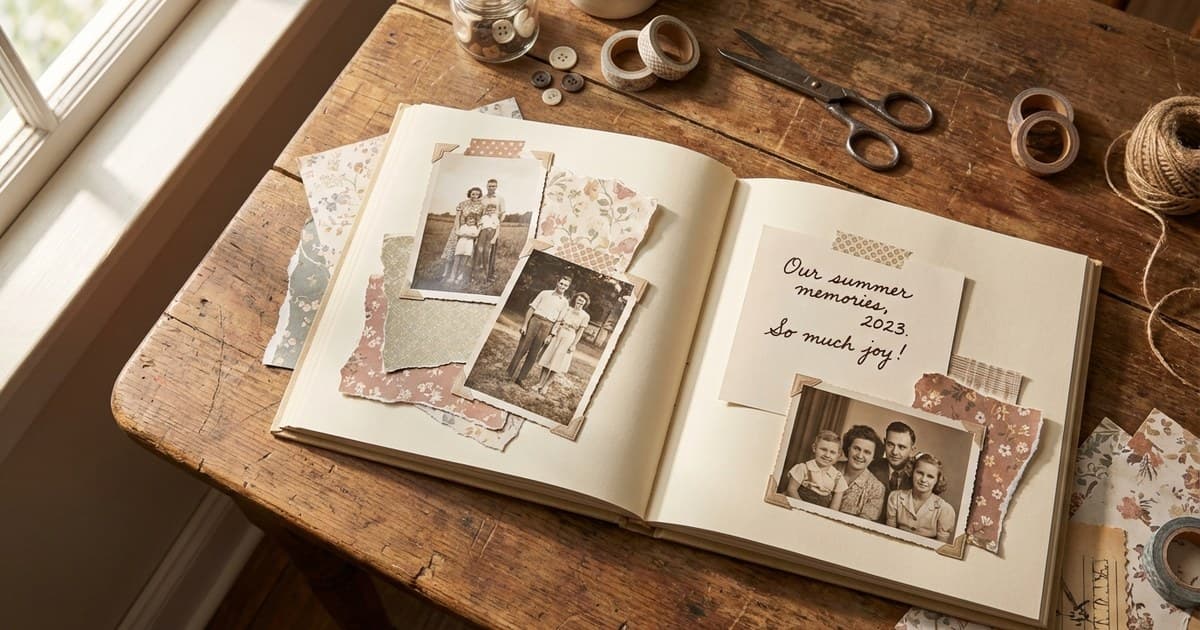
There’s usually one photo that starts it all.
Not the perfect one. Not the one with great lighting or everyone smiling at the camera. I’m talking about the one where your kid is mid-laugh, your partner is slightly blurry in the background, and the kitchen bench is full of everyday chaos. That photo doesn’t win awards—but it means everything.
That’s why we scrapbook.
We scrapbook because memory keeping is less about perfection and more about preserving the feeling of a real life moment before it disappears into the camera roll.
If you’ve ever wondered, “Why does this matter so much to me?” this post is for you. And if you’re ready to make memory keeping easier (not another unfinished project), I’ll walk you through a practical workflow you can use in MyScrapbook Studio today.
The Real Reason We Scrapbook
Most of us don’t scrapbook because we need another hobby. We scrapbook because we want:
- a way to make sense of fast-moving life,
- a place to celebrate small wins,
- and a record of stories we don’t want to forget.
Photos capture what happened. Storytelling captures why it mattered.
A layout with one sentence like, “This was the week she learned to ride without training wheels,” becomes more valuable over time than 200 unlabeled photos buried in cloud storage.
Community Story #1: “I Finally Printed My Everyday Photos”
One of the most common stories we hear in the MyScrapbook Studio community sounds like this:
“I waited for big milestones, then got overwhelmed. Once I started documenting normal Tuesdays, I actually kept going.”
That shift is huge. Memory keeping gets easier when you stop waiting for “important enough” moments.
Try this in MyScrapbook Studio
Use a simple Everyday Story Template with:
- One main photo (the moment)
- Two detail photos (context)
- Three short journaling lines:
- What happened?
- Why did it matter?
- What do I want to remember later?
This creates structure without pressure. You can complete a meaningful page in 15–20 minutes.
Community Story #2: “I Couldn’t Keep Up Until I Built a Workflow”
Another familiar story: people love memory keeping, but they lose momentum when each page starts from scratch.
Consistency comes from systems, not motivation.
The 30-minute weekly workflow
Set one recurring block each week and follow this sequence:
- Collect (5 min): Add this week’s photos to one album.
- Select (5 min): Choose 6–10 photos using the “story first” rule.
- Build (15 min): Drop photos into a saved template.
- Journal (5 min): Add short captions while details are fresh.
In MyScrapbook Studio, you can save your favorite layout as a reusable template so each new page starts 80% done.
Story-First Photo Selection (So You Don’t Overthink)
When you’re choosing photos, ask one question:
“If I could only keep three photos from this week, which three tell the story best?”
That question helps you avoid decision fatigue and keeps pages emotionally clear.
A good three-photo set usually includes:
- Anchor shot: the main event or people
- Detail shot: hands, objects, food, notes, or little textures
- Context shot: where you were or what the setting felt like
You don’t need technical perfection. You need emotional relevance.
How to Write Journaling That Feels Human
A lot of scrapbookers stall at the same point: blank text box, no words.
Here’s a shortcut that works every time.
Use this 3-line journaling formula:
- Today looked like…
- What I don’t want to forget is…
- Later, I hope we remember…
Keep each line to one sentence. That’s it.
If you want to go one step further, create a saved text style in MyScrapbook Studio so your journaling sections stay visually consistent across pages.
Build a “Why We Scrapbook” Album as a Family Legacy
If you want a powerful project for this season, create a dedicated album called Why We Scrapbook.
Add pages that answer questions like:
- What ordinary moment made me feel grateful this week?
- What has changed in our family recently?
- What do I want future us to know about this season of life?
This turns your scrapbook from a random collection into a story archive. Over time, it becomes a timeline of identity, not just events.
Software Tips That Save Time Immediately
Here are practical MyScrapbook Studio habits that help people stay consistent:
1) Save your top 3 templates
Pick one clean grid, one story-focused layout, and one photo-heavy layout. Reuse them on rotation.
2) Create a mini element kit
Build a small set of go-to items: one neutral paper pack, one font pairing, one journaling card style. Fewer decisions = faster pages.
3) Use naming conventions for albums
Try: 2026-02 Week 4 | Everyday.
This makes searching and revisiting pages much easier later.
4) Journal in draft mode first
Write captions quickly without formatting. Style at the end. You’ll write faster and sound more natural.
5) End each session with “next page prep”
Before you close, drop 3 candidate photos into a new page. Next session starts with momentum.
When You Feel Behind, Start Smaller
If your photo backlog is massive, don’t try to catch up all at once.
Create one “This Month in 9 Photos” page.
- Choose 9 images.
- Add one sentence summary.
- Export and celebrate the win.
Progress beats perfection every single time. One finished page is better than 40 half-started projects.
Why This Matters More Than Ever
Life is fast, digital, and noisy. Memory keeping gives us a chance to slow down and notice what was meaningful.
Scrapbooking is not about proving your life is perfect. It’s about preserving truth, connection, and growth—one story at a time.
When you create pages from real moments, you’re building something your future self (and your family) can return to when memory gets fuzzy.
That’s the heart of community stories: they remind us we’re not the only ones trying to hold onto what matters.
Your Saturday Action Plan
If you only do one thing today, do this:
- Open MyScrapbook Studio.
- Pick three photos from this week.
- Use one template.
- Write three lines.
- Export one completed page.
Done.
You don’t need a perfect setup. You just need a repeatable rhythm.
And if you’re part of the MyScrapbook Studio community, share your page this weekend—your story might be the one that helps someone else finally begin.