Digital Scrapbook Paper: How to Choose, Use and Create It

Digital Scrapbook Paper: How to Choose, Use and Create It
TL;DR: Digital scrapbook paper is a high-resolution background file — typically a 12×12 inch, 300 DPI JPG or PNG — that replaces the physical decorative paper sheets you'd buy at a craft store. You drag it behind your photos in software like MyScrapBook Studio instead of cutting and gluing. According to Craft Industry Alliance research, digital paper was the most downloaded free resource in the memory-keeping category between 2020 and 2024, a period when the digital crafting segment grew 34%. Free designs are on sites like The Lilypad and Oscraps; you can make your own in about 20 minutes.
Published: May 25, 2026 | 8 min read
Jump to: - What Is Digital Scrapbook Paper? - How Do You Use Digital Scrapbook Paper in Layouts? - Where Can You Find Free Digital Scrapbook Paper? - How Do You Create Your Own Digital Scrapbook Paper? - FAQ — Digital Scrapbook Paper Questions Answered
What Is Digital Scrapbook Paper?
It's a high-resolution digital file — a 12×12 inch, 300 DPI JPG or PNG — that sits behind your photos on a scrapbook page. Same role as the physical paper you'd buy at a craft store, minus the cutting and gluing. You drag it onto the canvas, put your photos on top, and you're basically done with the background.
According to Craft Industry Alliance research, the digital crafting segment grew 34% between 2020 and 2024, with digital paper being the most downloaded free resource in the memory-keeping category throughout that period. That tracks with what you see in online communities — it's usually the first thing people go looking for.
Papers come in solid colours, patterns (geometric, floral, watercolour washes), and textured designs that mimic physical materials like kraft paper, linen, aged parchment, or vintage ledger sheets. Commercial kits typically bundle 10–20 coordinated sheets with matching embellishments so everything in a layout goes together without requiring any design judgment on your end.
For a detailed look at how the file format and software pipeline works: how digital scrapbook paper works.
How Do You Use Digital Scrapbook Paper in Layouts?
The paper goes on the bottom layer. Everything else — photos, journaling, embellishments — stacks on top. That's the whole system.
In practice, most layouts use two or three papers:
- Layer 1 (bottom): Full-page background paper — fills the entire 12×12 canvas
- Layer 2: Accent papers — strips, squares, or torn-edge shapes in coordinating colours
- Layer 3: Photos (with or without digital frames or shadows)
- Layer 4 (top): Journaling, titles, embellishments, and date stamps
On mixing patterns
Mixing too many busy patterns is the mistake most beginners make. The 60/30/10 rule helps: 60% dominant paper, 30% quieter accent (usually a solid or near-solid), 10% embellishments and journaling. If your photos already have a lot going on visually, the paper should be doing less. A simple linen texture won't compete with a group photo the way a large floral pattern will.
Clipping masks
In MyScrapBook Studio, you can clip any paper file to a shape — a circle, a star, an irregular torn-edge frame — and the paper fills that outline exactly. This is how you get paper appearing inside a die-cut element rather than a flat rectangle underneath everything. It sounds technical but it's a thirty-second operation, and the visual payoff is significant.
Printing pages at home (hybrid scrapbooking)
Some digital papers are designed to look like actual printed paper — with visible grain, slight colour variation, and deliberate imperfections. If you're assembling a physical album, these work best. They match what comes off the printer because they were designed to.
Want to try it? Open the MyScrapBook Studio editor — every template already has coordinated paper layers in place. Your job is just to swap in your own photos.
Where Can You Find Free Digital Scrapbook Paper?
There's a lot of it. The licensing varies more than people realise, so it's worth understanding before you build a collection.
Most free scrapbook paper falls into two categories. Creative Commons Zero (CC0) means you can use it anywhere without attribution — personal projects, print-on-demand, whatever. Personal-use-only means your own printed albums are fine, but you can't sell layouts, share files for download, or include papers in products you sell. Most designers are explicit about this on the download page, but if it's not mentioned, assume personal use only.
Where to look:
- The Lilypad (thelilypad.com) — monthly free section with full coordinated kits; personal use, attribution to the designer required
- Oscraps (oscraps.com) — community-run marketplace with a regularly updated freebies page
- Design Bundles (designbundles.net) — weekly free downloads that often include paper packs; free account required to download
- Pixabay — mostly solid colours and simple textures, CC0, no restrictions at all
- Pinterest boards — individual designers share freebies fairly regularly; searching "free scrapbook paper download 2026" surfaces recent releases
One thing that catches people out
Mixing papers from five different designers in one layout rarely looks good. Colour temperature, grain scale, and general visual weight all differ between designers, and the page ends up looking assembled rather than considered. If you find a free kit that works for a project, use the whole kit for that project rather than pulling individual sheets from different sources.
What to avoid
Sites with hundreds of papers in mass zip files, no designer attribution, and no licensing page are almost always redistributing paid commercial designs without permission. Beyond the ethical issue, these files tend to have inconsistent DPI and poor export quality.
How Do You Create Your Own Digital Scrapbook Paper?
Sometimes a commercial kit gets you 80% of the way there and you need the other 20% in a specific colour or texture that doesn't exist as a free download. Making your own is faster than it sounds. You don't need Photoshop — MyScrapBook Studio has enough to handle this.
Textured solid papers
A textured solid is the most useful paper you can make yourself. It pairs with any pattern kit without competing visually, and the process is straightforward:
- Open a new 12×12 canvas at 300 DPI in MyScrapBook Studio
- Fill the background with your base colour (colour picker or hex code)
- Add a texture overlay from the asset library — linen, watercolour wash, kraft, and vintage paper textures are all there at adjustable opacity
- Set opacity between 30–50% for something subtle, or 70–90% if you want it to read as heavily textured
- Export as PNG at 300 DPI for print, or 150 DPI if it's staying digital
Simple pattern papers
Pattern papers take a bit more time but give you control over how the repeat looks:
- Draw a repeating element with the shape tools — a stripe, a small dot, a simple leaf shape
- Group it and tile across the canvas using the pattern fill option
- Set the background and pattern colours separately (makes contrast adjustments easier)
- Add a 3–5% noise layer on top to break the digital regularity — this is what makes a pattern paper look printed rather than generated
AI-generated textures
If you have access to an image generator, you can create seamless textures (watercolour washes, concrete, linen, terrazzo) and bring them into the editor as background layers. The key phrase in your prompt is "seamless repeating texture" — without it, the edges won't tile cleanly and you'll see seam lines across the page. Import the result and layer over it from there.
If you're building a beach holiday album and no kit has exactly the right shade of muted seafoam-green, this gets you there in about twenty minutes.
FAQ — Digital Scrapbook Paper Questions Answered
What size is digital scrapbook paper?
Standard is 12×12 inches at 300 DPI — a 3,600×3,600 pixel image, matching traditional physical scrapbook page dimensions. Some designers also make 6×6 inch papers for smaller albums and 8.5×11 inch sheets for standard home printing. When you import paper into MyScrapBook Studio it scales to fit your canvas, so the exact pixel count matters less than getting the DPI right for your output.
Can I print digital scrapbook paper at home?
Yes, as long as the file is 300 DPI and your printer can handle the size. Most home printers manage 12×12 cardstock with the right settings; you can also print on 8.5×11 and trim. Use heavyweight matte photo paper (65–80 lb cardstock) rather than standard copy paper, which tends to wash out colours and show through on textured designs.
Is digital scrapbook paper the same as a digital kit?
No. A digital kit is a bundle — papers (usually 10–20 sheets) plus embellishments (digital stickers, frames, ribbons, word strips) and sometimes alphabets or journaling cards. Digital paper is just the background-layer component. You can buy paper-only packs if that's all you need, or full kits when you want everything to coordinate without sourcing elements separately.
Do I need Photoshop to use digital scrapbook paper?
No. Software like MyScrapBook Studio is built for this workflow: drag paper onto the canvas, place photos on top, adjust layers. Photoshop gives you more control over blending modes and custom brush textures, but it's a significant learning curve for something you can accomplish in software designed specifically for scrapbooking.
What file format is best for digital scrapbook paper?
PNG if the paper has transparency — irregular edges, torn borders, distressed effects where the background shows through. JPG for solid or simple pattern papers where you don't need transparency and want a smaller file size. For print output, export at 300 DPI. For digital-only albums, 150 DPI is fine.
How do I organise a big digital paper collection?
By colour family or by project, not by designer name or purchase date. A folder called "Warm Neutrals" is more useful six months later than "Oscraps March 2026 freebies." For active projects, copy only what you're using into a project folder — it keeps licensing clear and makes the working directory manageable. Eagle App and Adobe Bridge both support browsing by thumbnail colour, which is typically how you think about finding a paper when you're mid-layout.
The paper layer is what makes a layout look considered rather than random. Get that right first, then add photos, then embellishments.
If you're just getting started, the complete beginner's guide to digital scrapbooking covers every part of a page layout from the first blank canvas to the final export.
Related Kits
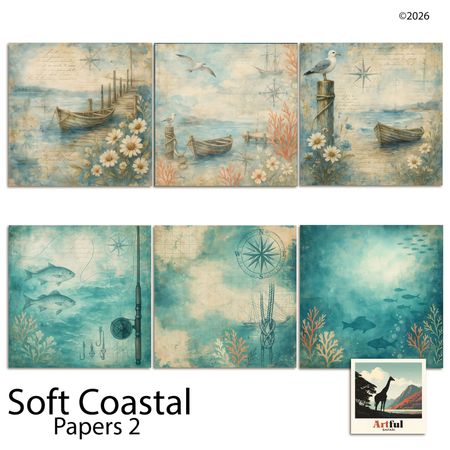
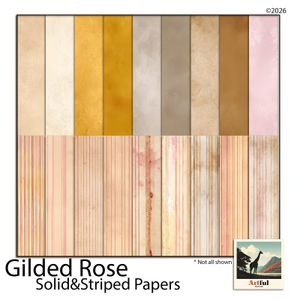
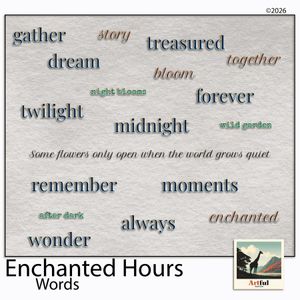
Kits from creators in our marketplace that match this article.
Related guides
How Digital Scrapbook Paper Works — and How to Create Your Own in MyScrapBook Studio
Digital scrapbook paper is a layerable background that goes under your photos. Here's how it works — and how to create your own in under 5 minutes.
Photo Organization Apps: How to Sort 30 Years of Memories
The photo organization apps worth your time in 2026, plus a sorting system that turns 30 years of camera-roll chaos into finished scrapbook pages.
5 Photo Scrapbook Layout Ideas (Designs That Work for Any Story)
Build a 5-photo scrapbook page in 15 minutes — five proven layouts with measurements, story tricks, and MyScrapBook Studio templates.
Digital Scrapbook vs Photo Book: Which Should You Make?
Digital scrapbook or photo book? Compare cost, time, durability, and storytelling depth — then choose the right memory project for your photos.